Obesity and Hernia: How Excess Weight Increases the Risk
In this article
AREN
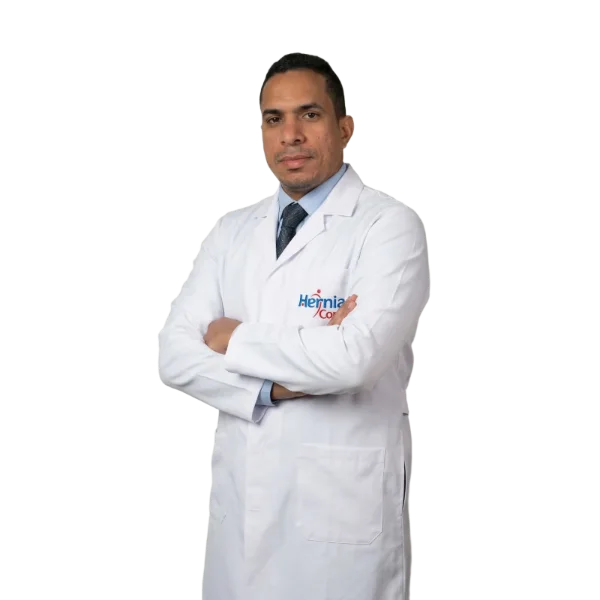
Dr Mohamed EsmatConsultant in General, Laparoscopic and Hernia Surgery
Risk factors · Medical awareness
How excess weight raises pressure on the abdominal wall, increases the risk of hernia, and affects the success of surgery and recovery.
Obesity and hernia share a close relationship that is often overlooked. The effect of excess weight is not limited to the heart and joints; it places the abdominal wall under constant pressure, making it more prone to hernia and making both treatment and recovery more difficult.
Types of hernia.
How Does Obesity Increase the Risk of Hernia?
The effect of obesity does not come from a single direction, but through several cumulative pathways that weaken the abdominal wall and raise the pressure on it at the same time:
1
Raised Abdominal Pressure
Excess fat permanently raises the pressure inside the abdominal cavity, pushing tissues towards weak points.
2
Weakening of the Abdominal Wall
Continuous stretching of the wall as weight increases gradually weakens its muscles and supporting tissues.
3
More Difficult Diagnosis
A layer of fat may hide a small hernia, so its detection is delayed until it grows larger or complications appear.
4
More Difficult Surgery and Recovery
Obesity increases the difficulty of the operation and the likelihood of complications, and slows wound healing after the repair.
Obesity After Hernia Surgery: Why Does It Matter?
Excess weight affects not only whether a hernia develops, but also the outcome of its repair. Constant pressure on the repair site increases the risk of the hernia coming back and slows healing. Controlling your weight before and after the operation makes a clear difference to the outcome.
Risks of Obesity for Hernia Patients
- Increased likelihood of developing a hernia.
- Higher risk of the hernia recurring after surgery.
- Greater difficulty during the surgical operation.
- Slower wound healing and an increased risk of infection.
- Increased constant pressure on the repair site.
Losing Weight … A Step for Your Health
- Reduces pressure on the abdominal wall.
- Improves the chances of a successful surgical repair.
- Reduces the risk of hernia recurrence and complications.
- Makes the operation easier and speeds up recovery.
- Supports your general health, your heart and your joints.
Should You Lose Weight Before the Operation?
hernia diagnosis while waiting to lose weight, especially if there are worrying symptoms.
Warning
strangulated hernia and its emergency signs, and do not wait to lose weight if warning signs appear.
How Can You Lose Weight Safely With a Hernia?
recovery after surgery.
the official website of Dr Mohamed Esmat or book your appointment for a comprehensive assessment.
Why Is a Hernia Harder to Manage in Patients With Obesity?
The challenge with patients with obesity is not limited to surgery; it begins with the diagnosis itself. A thick layer of fat may hide a small hernia and make it harder to feel during the clinical examination, which may delay its detection. For this reason, the doctor may need to rely on imaging in these cases more than in others to reach an accurate diagnosis.
During surgery, obesity requires particular care in choosing the surgical approach, the size of the mesh and the method of fixing it, to ensure adequate coverage of the weak area. The recovery period may also be slightly longer, and the patient needs closer follow-up to avoid wound complications. All these considerations confirm that controlling weight, even partially, simplifies the entire treatment journey.
“Losing weight before hernia repair is not an impossible condition, but an investment in the outcome of the operation. Even losing a small amount of weight reduces the pressure on the repair site and improves the chances of it holding firm.”
Dr Mohamed EsmatConsultant in General, Laparoscopic and Hernia Surgery
Frequently Asked Questions
Does obesity directly cause a hernia?
Obesity is an important risk factor that raises the pressure inside the abdomen and weakens its wall, increasing the likelihood of a hernia, but it usually acts together with other factors combined.
Should I lose weight before hernia surgery?
The doctor may advise this in non-emergency cases to improve the outcome and reduce the risks, but the decision depends on your case. Consult your doctor to determine what is most appropriate.
Can the hernia come back if I remain overweight after the operation?
Continued obesity raises the pressure on the repair site and increases the likelihood of the hernia recurring, so maintaining a healthy weight after surgery is recommended.
Do you have symptoms of a hernia?
Book your consultation with Dr Mohamed Esmat for an accurate assessment and a treatment plan suited to your case.
This article is for general medical awareness purposes only and is not a substitute for consulting a specialist doctor. To have your case assessed, please book with Dr Mohamed Esmat.
Need your condition assessed?
Book a consultation with Dr. Mohamed Esmat for an accurate diagnosis and a treatment plan suited to you.

Dr. Mohamed Esmat
Consultant hernia and abdominal wall surgeon, PhD in General Surgery and founder of Hernia Core — the first Arab clinics dedicated to hernia surgery. 15+ years of experience and over 5,000 successful cases.
This article is for general medical awareness only and does not replace a consultation with a specialist. To assess your case, please book with Dr. Mohamed Esmat. Last reviewed: June 12, 2026.